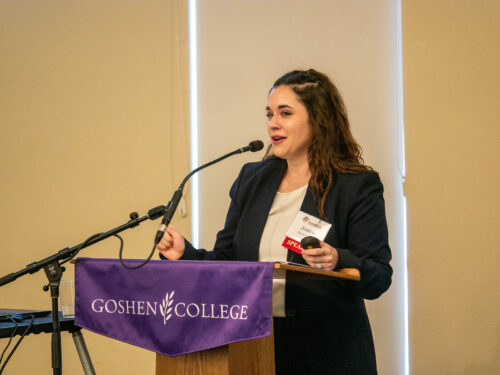
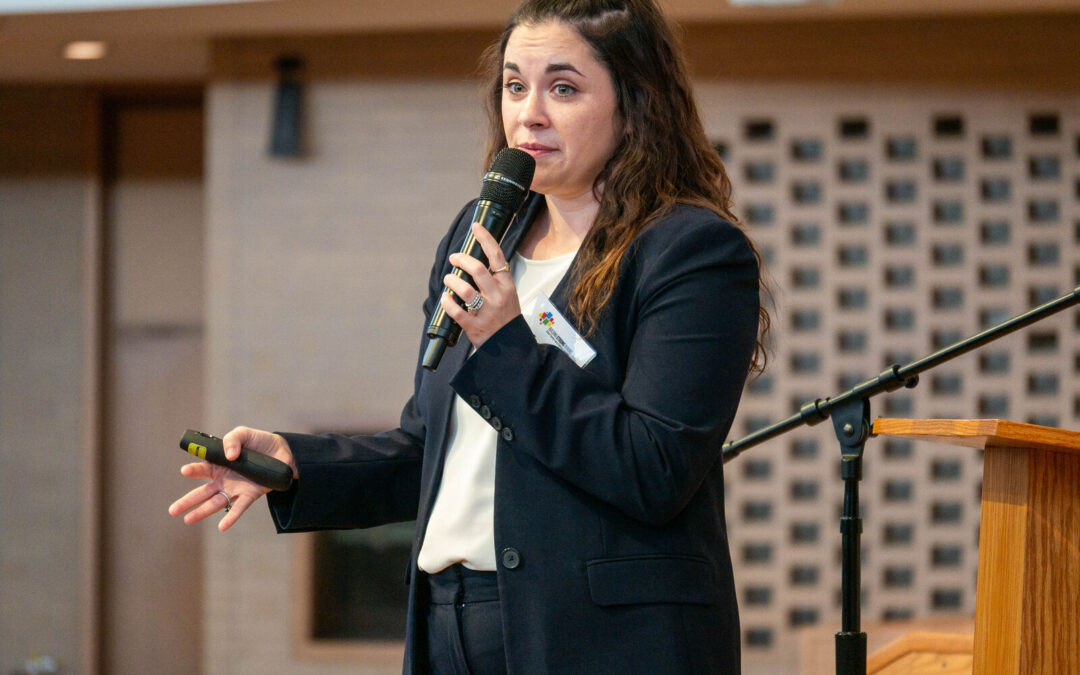
A keynote from Jessica Herzog-Hall at the 2025 Building Strong Brains Summit explored how the HOPE Framework and Positive Childhood Experiences support resilience in children and families. Here’s what she shared—and how Elkhart County can apply these tools.
Introducing Jessica Herzog-Hall
Jessica Herzog-Hall is a trauma-informed educator focused on resilience and healing. She holds a master’s degree in social work from Indiana University and a graduate certificate in applied educational neuroscience from Butler University. She previously led the ACEs Indiana Coalition and now serves as chief executive officer of Together We Flourish LLC, helping communities strengthen well-being through Positive Childhood Experiences (PCEs) and the HOPE (Healthy Outcomes from Positive Experiences) Framework. On November 11, 2025, at the Building Strong Brains Summit at Goshen College, she led a keynote and workshop that offered clear, practical guidance for supporting children and families.
Imagining a World Anchored in Positive Experiences
Jessica encouraged the audience to imagine a community where positive experiences are recognized as essential to health. When schools, clinics, and service providers focus on strengths—alongside challenges—they build trust with families and support children in meaningful ways.
The Science Behind Positive Childhood Experiences (PCEs)
Jessica highlighted research showing how PCEs influence lifelong health. A 2015 Wisconsin study added seven PCE questions to the ACEs survey, asking whether individuals:
- Could talk to a family member about feelings
- Felt their family stood by them
- Enjoyed community traditions
- Felt belonging in high school
- Felt supported by friends
- Had two or more nonparent adults who cared
- Felt safe at home
Mental health outcomes rose with each additional PCE:
- 0–2 PCEs: 51% reported good mental health
- 3–5 PCEs: 75%
- 6–7 PCEs: 87%
Higher PCEs were also connected to better physical health, stronger employment outcomes, and reduced negative effects of adversity.
The Four Building Blocks of HOPE:
Relationships
Children grow in the presence of steady, caring adults. Strategies include:
- Being a consistent supporter
- Encouraging warm parent-child interactions
- Helping families identify mentors, teachers, or coaches
- Making space for moments of connection
- Modeling healthy regulation
Environment
Safe, stable, and equitable spaces help children feel secure. Examples include:
- Creating welcoming classrooms and programs
- Addressing bullying and encouraging “up-standers”
- Offering calming corners
- Ensuring representation of all families
- Connecting families with local resources
Engagement
Belonging fuels confidence and healthy development. Communities can support this by:
- Asking children about their interests and celebrating them
- Supporting involvement in after-school activities, clubs, or community centers
- Encouraging family volunteering or creative projects
- Connecting families with faith-based or community groups
Emotional Growth
Children need chances to practice emotional awareness and navigate conflict. Strategies include:
- Helping children name and understand feelings
- Allowing open-ended, child-led play
- Teaching respectful conflict resolution
- Practicing self-regulation and co-regulation
When the Brain Is Stressed: How Adults Can Help
Jessica explained how stress affects a child’s ability to reason. When overwhelmed, the brain shifts into survival mode and cannot access problem-solving skills. Instead of asking children to “calm down,” adults can support them by regulating themselves first. Helpful approaches include:
- Sitting at the child’s eye level
- Using a soft tone
- Modeling slow breathing
- Naming the emotion (“I see you’re upset”)
- Offering calm reassurance
These practices help children recover emotionally and learn through connection rather than correction.
Tools for Self-Regulation
Jessica shared simple strategies that support both immediate calming and long-term resilience:
- Breathing exercises
- Sensory grounding methods
- Mindfulness, meditation, or time in nature
- Movement such as dancing or yoga
- Anchoring objects or supportive people
- Sour candy or cool water to help reset the nervous system
The Resilience Tree: A Simple Metaphor
Jessica used the image of a tree to describe resilience. Children grow strong when their roots—connection, safety, understanding, and positive experiences—are nurtured. These roots help them weather difficulties throughout life.
Why This Matters for Elkhart County
The HOPE Framework strengthens Building Strong Brains’ ongoing work to support early childhood brain development. When caregivers, schools, health providers, and community organizations use these tools, children gain more of the experiences that help them grow and belong. In practice, this includes:
- Designing welcoming, inclusive spaces
- Strengthening relationships across programs and neighborhoods
- Creating meaningful opportunities for family engagement
- Supporting emotional learning and self-regulation
Together, these approaches help build a community where children can flourish.
Next Steps: Putting HOPE Into Daily Practice
Jessica encouraged participants to try simple, consistent steps:
- Identify supportive adults in each child’s life
- Review spaces to ensure families feel represented and welcomed
- Expand engagement opportunities for children and caregivers
- Make room for play, gratitude, and movement
- Practice adult self-regulation to strengthen co-regulation
In Closing
Jessica Herzog-Hall reminded us that hope is practiced—not wished for. Elkhart County’s Building Strong Brains coalition has already planted strong roots. With intention and partnership, we can continue building a community where every child has the experiences they need to thrive.