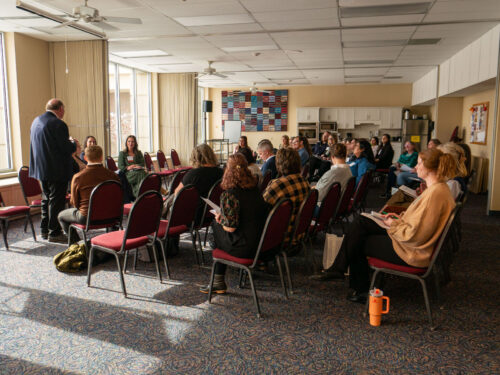
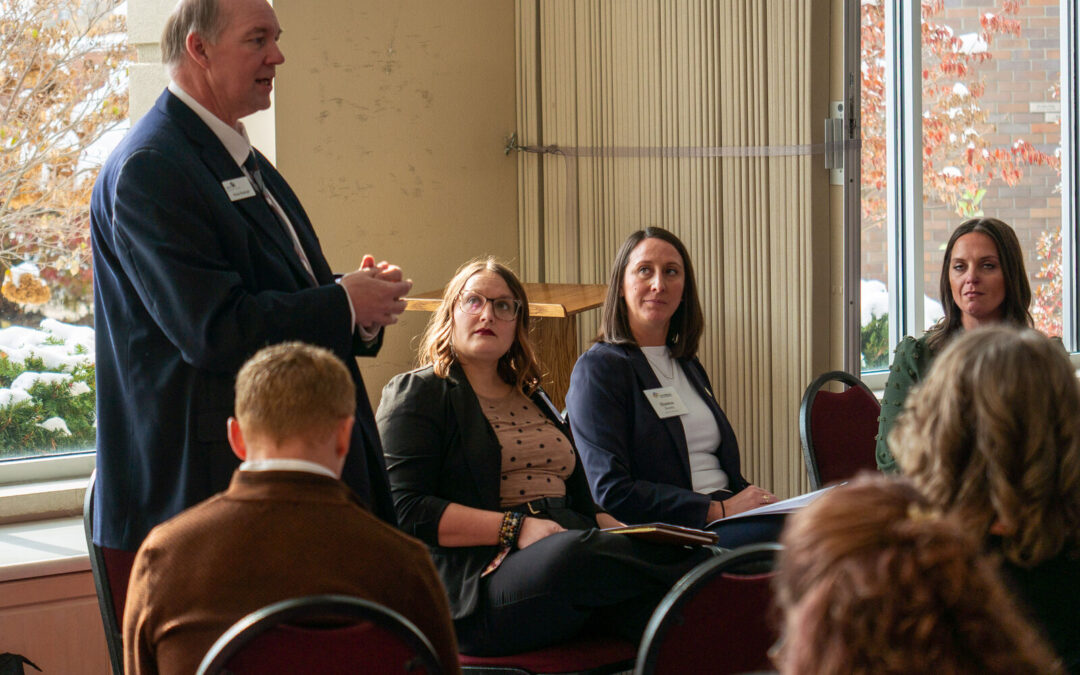
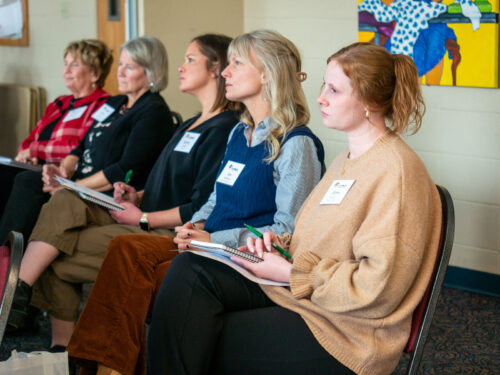
At the Building Strong Brains summit on November 11, about 40 people crowded into a breakout room to discuss something that often remains in the background: the intersection of work and family life in Elkhart County.
The “Family Friendly Workplaces” session, moderated by Brian Replogle from Building Strong Brains and the Community Foundation of Elkhart County, brought together HR leaders from Lippert and Interra Credit Union, business owners, city and chamber staff, nonprofit leaders, and parents. For many in the room, it was the first time they had sat down across sectors to ask a basic question: what does a family-friendly workplace actually look like here?
Starting with safety instead of fear
One of the first comments named something that many feel but rarely say out loud. In a family-friendly workplace, employees do not spend their days in fear.
- They are not afraid of losing points or being fired if they leave early to pick up a sick child.
- They are not afraid to ask for time to pump breast milk.
- They are not afraid to say, “I need an hour to deal with a family situation,” and be honest about why.
People acknowledged how hard this is, especially in factories and other places where work stops if a person is not at their station. The tension is real. At the same time, the cost of ignoring family pressures is also real. Stress, burnout, health issues, and turnover are costly for employers and distressing for families.
HR leaders in the room described training managers in emotional intelligence, psychological safety, and Mental Health First Aid so they can notice when someone is struggling and connect them to support. When managers are equipped to see people as whole human beings, it improves culture and stability at work and at home.
Why paid leave matters for children
Paid parental leave came up quickly. Participants shared examples of policies that include mothers, fathers, and adoptive parents, and that let parents share time off in ways that work for their family.
Those months before a child ever steps into a preschool classroom are exactly what we talk about in the HOPE Framework and in Building Strong Brains. How we structure leave policies is already shaping a child’s development long before kindergarten.
The childcare math that families face
 Parents shared that they pay around $250 a week or more per child. That competes directly with rent, food, and medical bills. On top of that, Elkhart County has only a fraction of the childcare seats we need, so many families face long waitlists or long drives to centers across town.
Participants named a few directions that might help, including deeper partnerships between employers and childcare centers, reserved or subsidized seats for employees, and cost sharing models where employers, families, and philanthropic or public dollars each carry part of the bill. For parents, that can mean the difference between an impossible weekly payment and something they can manage.
Other Indiana communities are already experimenting with these ideas. Our task now is to learn from them and discover what fits the realities of Elkhart County’s employers and workforce.
Policies that people can actually use
Several stories made it clear that benefits only matter when people know about them and feel free to use them.
One father of a child with significant disabilities described juggling surgeries and therapy appointments for 15 years before anyone mentioned that he was eligible for intermittent FMLA. When he finally learned about it, it changed his stress level and his ability to keep working.
On the other hand, Interra Credit Union described how they created comfortable mother’s rooms at each location and trained managers to support parents who use them. The results have been happier parents, better reliability, and strong loyalty to the organization.
Again and again, people returned to the same theme. Employees need clear information on short term disability, leave options, counseling and financial help, and they need a workplace culture that encourages them to ask questions without fear.
Family can mean many things
Participants reminded each other that family is not limited to young children. People are also caring for aging parents, adult children with disabilities, and relatives across generations, sometimes all at once. A family friendly workplace recognizes that employees may be responsible for babies, teens, grandparents, siblings, or others who depend on them, and that those needs change over time.
What comes next
No one left the breakout with a perfect definition of a family friendly workplace, but there was clear agreement that it is work we need to do together. For Building Strong Brains, this ties directly to our vision that children in Elkhart County are born to thrive and ready for kindergarten, which depends on adults having workplaces that support family life. If you are an employer, HR leader, parent, caregiver, or community partner, we would be glad to connect and keep this conversation moving.
To join the conversation, contact Brian Replogle, brianr@inspiringgood.org, or Patty Rose, patty@inspiringgood.org.